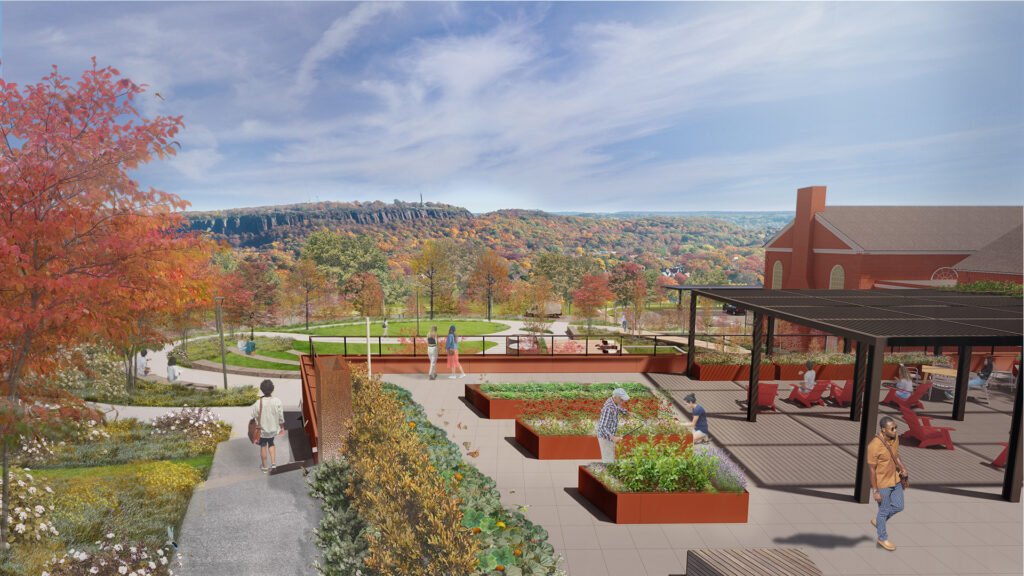
The East Portal’s framed vista provides residents and visitors with a sense of orientation and natural beauty that celebrates the spirit and place of the Living Village within its broader ecological context. It invites movement out into the surrounding landscape, reminding students and visitors alike that the Village is not meant to contain its residents but compel them out into the natural world and wider community beyond. On the terrace you’ll find accessible raised kitchen gardens, growing salad greens, winter roots, and medicinal herbs. These kitchen gardens are an essential aspect of the Living Village’s commitment to urban agriculture, affording residents the opportunity to grow herbs and vegetables and make them part of their daily meals. The terrace garden is designed to be an essential aspect of the Divinity Farm, located to the east of the Portal. The farm is a student-run, hands-on site for learning about organic agriculture, seasonal planting, and regenerative practices.
Divinity Farm
A community garden established in 2009 by YDS students, faculty, and staff, Divinity Farm is tended by campus volunteers in cooperation with the Yale School of the Environment.
The existing Divinity Farm, to the east of the Living Village’s boundary, is a much-loved piece of the campus landscape. The Living Village project works to highlight and celebrate the farm and offer it room to grow. Through the use of edible and medicinal plants throughout the planting beds, the Living Village will showcase how agricultural practices can be sewn in throughout a more formal and parklike design. Replacing traditional flowering plants with fruits, nuts, herbs, and vegetables, the landscape will be beautiful but also useful. New, accessible pathways connecting the existing farm space to the Community Courtyard will be lined with these useful plants.
Divinity Farm is a site where students and others study, contemplate nature, pick herbs, meet friends, and join community events. Students barbeque, sit around the firepit, play croquet and frisbee, and enjoy the birds and other wildlife. The garden offers the community a space to think about theology while actively engaging their senses with the extraordinary gift of creation.
Requisite Petals: Beauty, Place, Health & Happiness
You must be logged in to post a comment.